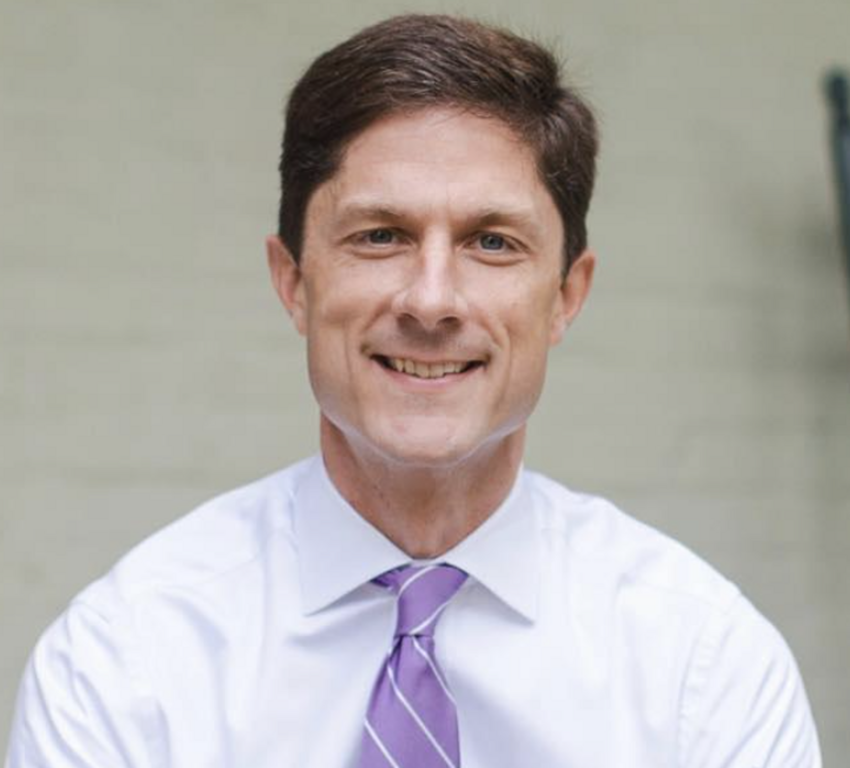
Robert C. Vick is running as an independent for Tennessee governor in the Nov. 3, 2026, general election. Asked in our candidate questionnaire why he is seeking the office, Vick said, "I've spent 40 years in public education and enjoy being a servant leader. I felt God's calling to join the race and run as a Christian Independent."
This is Vick's first run for public office. He is certified for the ballot, according to BallotReady election data. Other candidates in the race include Marsha Blackburn (Republican), Jerri Green (Democratic) and independents Charles Van Morgan, Dave Seeman, David Hatley, Dean Brewer, Eddie Lee Murphy, Karl Knox Smithson, L. Webb Taylor, Lauren Pinkston, Misam Abidi, Ray Brown, Victor L. Scoggin and Wendell Jackson.
Candidate information
Hometown: According to his campaign website, Vick was born and raised in White Pine, Tennessee, in Jefferson County.
Family: "Married to Stephanie Bishop Vick, we have a blended family of 5 grown children and 6 grandchildren," Vick said in our questionnaire. He said no one in his family works in politics or government.
Party: "Independent," Vick said in our questionnaire.
Education: Vick listed the following degrees in our questionnaire: bachelor of science in math and science education, University of Tennessee-Knoxville (1986); master's of education in administration and supervision, Lincoln Memorial University (1996); educational specialist in administration and supervision, Lincoln Memorial University (1997); doctorate of education in school leadership, East Tennessee State University (2004).
Experience and public service
Vick said in our questionnaire that he has no previous elected or appointed offices. He described "40 great years in public education, started in 1986," listing roles as a teacher and coach at Morristown West High School, assistant principal and principal at Jefferson County schools, a teaching stint at Maury Middle School and 11 years as principal at Parrottsville Elementary. His most recent role was assistant principal and athletic director at Cocke County High School. Vick said he retired in June 2026.
On the issues
Top priority — public education: Asked the single most important issue he would address, Vick said in our questionnaire, "I would have to say 'pubic education', I feel it has been the step child of our state's government." He added, "I believe more funding should be put into public education. I am 100% against school vouchers."
On his campaign website, Vick said rural communities lack nearby private schools, making vouchers "an empty promise" that drains money from local public schools.
Education policy: Asked what changes he would make to K-12 education, Vick said in our questionnaire, "the greatest impact I could make as governor would be to lower pupil to teacher ratios." He said the state needs "to make teacher salaries competitive."
Cost of living and taxes: Vick said in our questionnaire, "To help with the daily cost of living I would first look at our sales tax on groceries. In my eyes, that is a very unfair tax to consumers in the lower income bracket, they pay a higher percent of their income." In responses published by the Nashville Banner, Vick said he could not yet support completely eliminating the grocery sales tax but thinks "we should always be willing to evaluate the way we collect taxes."
Public safety and mental health: Asked about reducing crime, Vick said in our questionnaire, "Driving to all 95 Tennessee counties, I saw two common themes across our state, poor mental health issues and homelessness." He said "our police force and mental health experts need to work as a team."
Infrastructure: Vick told the Nashville Banner, "I don't think we should dip into emergency funding accounts to fix roads in Tennessee unless that road is an emergency."
Data centers and AI: In responses published by NewsChannel 9, Vick said data center siting "should be a local decision within each county" and that the state needs "guardrails to protect our children, privacy concerns, and employees while balancing the need for economic innovation."
Candidate responses were collected through a Surround Sound News questionnaire and supplemented with publicly available campaign materials. Responses are presented in the candidate's own words and have not been edited for spelling or grammar.